




SERVICES
Dental Implants vs Dentures in Tracy, CA
What Dental Implants and Dentures Are
Dental implants are small posts placed in your jawbone that act like new tooth roots. Dentures are removable teeth that rest on your gums. Both replace missing teeth, but they work in very different ways.
Before you weigh dental implants vs dentures, it helps to know what each one really is. Not the brochure version. This is the plain version you’d hear sitting in our chair here in Tracy.
Let’s start with dental implants. A dental implant is a small post, usually made of titanium. We place it in your jawbone right where a tooth used to be. Over a few months, your bone grows snug around it. Then we attach a crown on top. That’s the part people see when you smile.
So an implant replaces the whole tooth. Root and all. That root is why it feels so steady when you bite into an apple.


Your Trusted Tracy Dentist
Since 2013
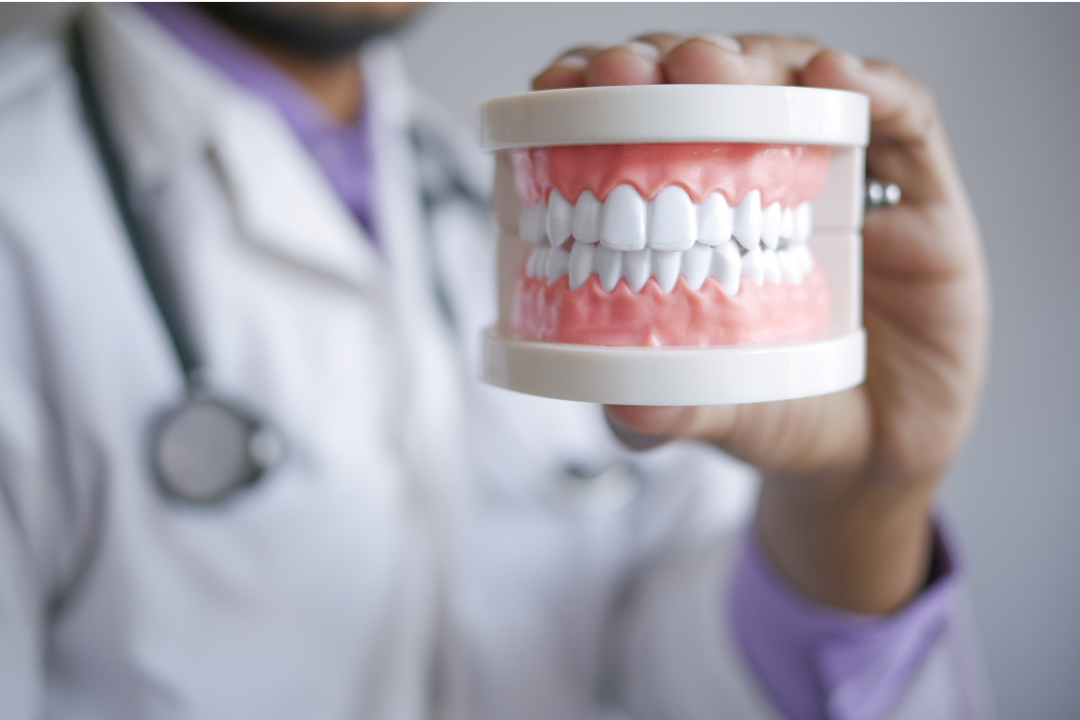
Dentures work in a different way. They’re removable teeth set in a gum-colored base. A full denture replaces a whole row of teeth. A partial denture fills gaps when you still have some healthy teeth left. Dentures rest on your gums. Some partials use small clasps that hook onto nearby teeth.
You take dentures out at night, you leave implants in for good.
Here’s the part most patients don’t hear about until we explain it. Your jawbone needs a tooth root to stay strong. When a tooth is gone, the bone in that spot slowly shrinks. Dental implants give the bone a root to hold onto again. Dentures sit on top of the gums instead. They can’t stop that slow shrinking. Over time, that’s often why dentures that once fit great start to feel loose.
But it’s not always one or the other. Plenty of folks are surprised to learn there’s a middle ground. Here are a few options we talk through with patients every week:
- Implant supported dentures snap onto a few implants so they stay put while you eat.
- All-on-4 implants hold a full arch of new teeth on just four posts.
- A partial denture can fill a small gap while you plan your next step.
- Bone grafting can rebuild thin bone and give an implant a strong base.
We see this a lot with patients from Tracy and nearby Mountain House. Someone has worn loose dentures for years. They figure implants just aren’t an option anymore. Then a quick look with 3D dental imaging shows they have more choices than they thought.
One patient told us she’d quit eating corn on the cob at family barbecues. Her lower denture kept slipping. After switching to implant supported dentures, she came back smiling. Her first summer cookout in years, and corn was the first thing on her plate.
So which one is right for you? That depends on your bone, your health, and how you want your teeth to feel each day. And how your smile feels at the dinner table matters more than people admit –
Either way, you don’t have to figure it out alone. Our team explains both options in simple words. We welcome new patients of all ages, and we speak more than one language. We also offer flexible payment options to help make care easier to plan.
Educational
Why Jawbone Health Is the Real Deciding Factor
Most people think this choice comes down to comfort or looks. It doesn’t. The real deciding factor sits under your gums, in your jawbone.
Here’s why. Your tooth roots do more than hold teeth in place. Every time you chew, they press down on the bone. That pressure tells your body to keep the bone strong. Lose the tooth, and the bone loses its job. So it slowly starts to shrink.
This is the part almost nobody tells you about.
Dentures sit on top of your gums. They don’t reach the bone at all. That’s fine for chewing, but it does nothing to stop bone loss. Over the years the ridge under your dentures gets smaller, the fit gets looser. That’s why many denture wearers need adjustments or a new set down the road.
Dental implants work in a different way. An implant is a small post placed right into the jawbone. It acts like a brand new root. And because it presses on the bone when you chew, it helps keep that bone healthy and in place.
So how do you know where your jawbone stands? You can’t really tell by looking in the mirror. But a few signs can give you a clue:
- Your dentures feel looser than they did a year or two ago
- You’ve been missing a tooth for several years
- Your lower face looks a little shorter or more sunken
- You’ve dealt with gum disease in the past
- Your lips or cheeks seem to fold inward when you smile
None of these mean dental implants are off the table. They just mean we should take a closer look.
Good news here. Low bone doesn’t automatically rule you out. We often use bone grafting to rebuild the area first. For upper back teeth, a sinus lift can make room for new bone. These steps add some healing time, usually a few months. But they open the door for people who were told no somewhere else.
We had a patient here in Tracy who’d worn a lower denture for almost 15 years. It slid around every time she ate. She was sure dental implants were out because of her bone. Our 3D dental imaging showed she had more to work with than she thought. With implant supported dentures, her denture now clicks firmly in place. She told us she finally ate corn on the cob again at a family barbecue –
Checking your bone is simple and painless. Here’s how we usually do it:
- We start with a gentle oral exam to check your gums and bite.
- Digital dental x-rays give us a quick first look at your bone.
- 3D dental imaging shows bone height and width from every angle.
- We sit down together and walk through what your results mean.
- You get clear options, with no pressure to decide that day.
Timing matters too. Bone loss tends to move fastest in the first year after losing a tooth. We see this all the time, people wait years and then need extra steps they could have skipped. Waiting doesn’t close every door. It just makes the path a little longer.
So before you pick dental implants vs dentures based on looks alone, find out what your bone can handle. It’s one easy visit. And it gives you real answers instead of guesses. Our friendly team welcomes new patients of all ages and is happy to explain everything in plain, simple words.
Comparing Daily Life: Eating, Speaking, and Cleaning
Charts and diagrams only go so far. What you really want to know is how your days will feel. Can you eat dinner with family? Will you sound like yourself? How much time will cleaning take?
Let’s walk through each one.
Eating is the first thing most people ask us about. Dental implants are anchored in your jawbone. So they feel and work a lot like natural teeth. You can bite into a crisp apple. You can chew a steak without thinking twice.
Dentures rest on top of your gums. Upper dentures use suction to stay in place, lower dentures tend to move more. Many people get used to them just fine. But chewing usually feels softer and less powerful than with real teeth. Sticky candy, popcorn hulls, and tough crusts can be tricky. Small seeds can slip under the base and sting.
We hear one story a lot. A patient told us she’d quietly stopped eating corn on the cob at summer barbecues in Tracy. She didn’t want her denture to slip in front of her grandkids. After switching to implant supported dentures, she said it was the first thing she ate. Small moment. Big deal for her.
Speaking comes next. New dentures can cause a slight lisp or a clicking sound at first. Your tongue and cheeks need time to learn the new shape. Most people adjust within a few weeks. Reading out loud at home really helps, we tell almost every new denture patient to try it.
Dental implants don’t shift when you talk. And because nothing covers the roof of your mouth, speech usually feels normal quickly. That matters if you talk a lot for work or love to sing at church.
Cleaning is where the routines look the most different. Neither one is hard. They’re just different habits. Here’s what a normal day looks like for each.
- Dental implants: Brush twice a day and floss around each implant, just like natural teeth.
- Dental implants: Keep up with regular dental cleaning visits so your gums stay healthy around the posts.
- Dentures: Take them out at night and brush them gently with a soft denture brush.
- Dentures: Soak them overnight so they don’t dry out or warp.
- Dentures: Brush your gums and tongue each morning, then rinse your dentures after meals.
Some people love that dental implants need no extra steps. Others don’t mind a nightly soak at all. It becomes part of the bedtime routine, like washing your face.
Here’s something most people don’t realize. Even with dentures, your gums still need care. Skipping gum brushing can lead to sore spots and a looser fit over time. And a looser fit means more slipping when you eat, more rubbing on the gums –
There’s also a middle path. Implant supported dentures snap onto a few implants. They’re far more stable than regular dentures. But you can still take them out to clean them. For many of our patients, that mix feels just right.
The best choice depends on your mouth, your health, and how you like to live. We’re happy to talk it through in English or Spanish, with no pressure at all.
FAQ
Common Questions
Is it best to get dentures or implants?
The better choice depends on your jawbone health, your budget for time, and how you want your teeth to feel each day. Implants give you a steady, root-like fit and help protect your jawbone. Dentures cost less upfront and need no surgery, but they can loosen over time. Many Tracy patients land on a middle ground, like implant supported dentures. A simple exam can show which path fits your mouth best.
Why do dentists discourage dentures in some cases?
Dentists sometimes steer patients away from dentures because they rest on the gums and don’t stop jawbone shrinkage. Over years, that bone loss can make dentures feel loose and change your face shape. This isn’t true for everyone, and dentures still work well for many people. The concern usually comes up when a patient has options for implants instead. A 3D imaging exam can show which choice protects your bone better long term.

Is it worth getting dental implants at 70 years old?
Age alone doesn’t rule out dental implants. What matters more is your jawbone health and overall health, not the number of candles on your cake. Many patients in their 70s and beyond get implants with good results. Healing may take a bit longer, but your dentist can check your bone with imaging first. If you’re curious whether you qualify, that’s a conversation worth having before assuming you don’t.
How do I know if my jawbone can still support an implant?
You can’t tell by looking in the mirror, but a few signs give clues. Loose-fitting dentures, a sunken lower face, or missing a tooth for years can point to bone loss. The real answer comes from a gentle exam plus digital x-rays or 3D imaging. These checks show bone height and width from every angle. If bone is thin, options like bone grafting can often rebuild it before placing an implant.
Does living in Tracy affect which option works best for me?
Tracy itself doesn’t change the biology of your jawbone, but local access to 3D dental imaging makes a real difference in getting an accurate answer fast. Patients from Tracy and nearby Mountain House often come in after being told elsewhere that implants weren’t possible. A closer look sometimes shows more options than expected. Comparing dental implants vs dentures starts with knowing your bone, and that check is quick and painless.
Can I switch from dentures to implants later if I start with dentures now?
Yes, many patients start with dentures and move to implants later, though waiting can mean extra steps. Bone loss moves fastest in the first year after losing a tooth, so delaying too long sometimes means needing bone grafting first. Switching is still possible years later for most people. If you’re wearing dentures now and want a steadier fit, an exam can show what your jawbone has to work with today.
Visit Us Today
Schedule an Appointment for Dental Implants
Maintain the stability and appearance of your newly aligned smile. Contact Smiles Dental Spa to schedule an appointment for dental retainers and space maintainers with Dr. Shirley Zhao.
Contact our office at (209) 836-1748 or conveniently schedule your appointment online through NexHealth. Visit us at 1431 N Tracy Blvd, Tracy, CA 95376—trusted care tailored for your family.

Phone

Location
1431 N Tracy Blvd
Tracy, CA 95376