





SERVICES

Endodontics in Tracy, CA

Comfort-First Endodontic Care

Saving Your Teeth with Expert Root Canal & Pulp Therapy

Endodontic treatment — root canals, pulp therapy, the works — can save a damaged or infected tooth and get you out of serious pain. At Shirley Zhao DDS in Tracy, we use advanced 3D imaging and modern techniques so the whole process is comfortable and predictable. Give our office on N Tracy Blvd a call, or reach us on our  emergency line to schedule your evaluation.

Let’s be honest. Nobody wants to hear “root canal.” But here’s what most people don’t realize — endodontic treatment is actually one of the best ways to kill tooth pain and keep your natural smile intact. We perform these procedures every week at Shirley Zhao DDS, located at 1431 N Tracy Blvd, for patients all across Tracy and the San Joaquin Valley.

So what exactly is endodontics? It’s the branch of dentistry that deals with the soft tissue inside your tooth — the dental pulp. When that tissue gets inflamed or infected from deep decay, cracks, or some kind of trauma, endodontic treatment goes straight to the source of the problem and removes it while keeping the tooth itself. Dr. Shirley Zhao graduated from UCLA and the University of the Pacific, and she’s a fellow of both the International Congress of Oral Implantology and the American Academy of Implant Dentistry. That’s years of advanced training backing every single procedure.

Tracy has grown to over 100,000 residents now, and young families make up a huge chunk of our community. More kids playing soccer and baseball. More adults running around with packed schedules. More dental emergencies that just can’t sit on the back burner. Our practice was built to handle all of that — comprehensive endodontic care for every age group. And our multilingual staff speaks Cantonese, Chinese, Tagalog, and Spanish, so language won’t ever stand between you and the care you need.

Your Trusted Tracy Dentist

Since 2013

Our goal through endodontic treatments is to clean out the damaged tissue, eliminate infection, and save your tooth structure whenever possible, supporting long-term oral health and a positive patient experience.

What Is Endodontics?

Endodontics focuses on treating the dental pulp—the soft connective tissue inside your teeth containing nerves and blood vessels. When deep decay, trauma, a crack or chip, or repeated dental procedures inflame or infect the pulp, patients often feel pain and sensitivity. If a dentist or endodontist doesn’t treat the infection promptly, it can spread, and the tooth might require extraction only as a last resort.

Relief from Pain, Protection for Life

Root Canal Treatment: A Tooth-Saving Procedure

Root canals are the most common endodontic procedure out there. The American Association of Endodontists reports a success rate above 95%. Pretty impressive, right? The goal is simple: remove the infected or damaged pulp tissue, disinfect everything inside the tooth, seal it up, and restore it so you can eat, smile, and go about your life pain-free.

Here’s something we hear all the time — patients tell us they were dreading the appointment but were genuinely surprised at how easy it was. Modern anesthesia, nitrous oxide sedation, and better instruments have completely changed the game. Most folks compare it to getting a regular filling. That’s it. Here’s what each stage looks like when you come into our Tracy office.

Root Canal Procedure

Diagnostic Imaging

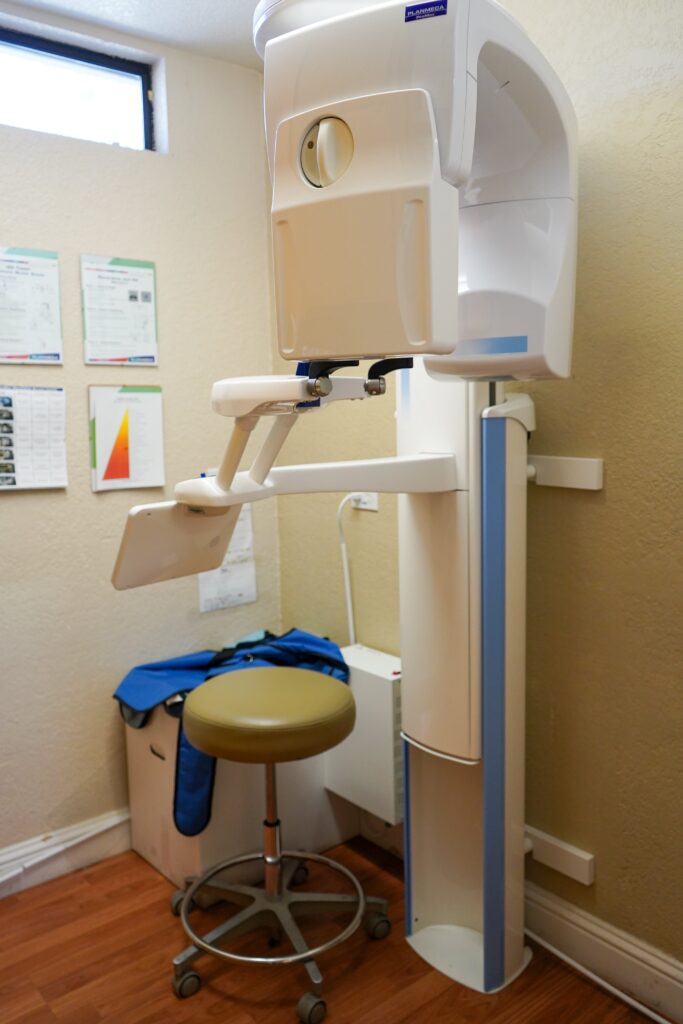
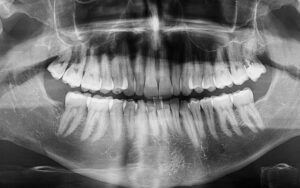
A good root canal starts with knowing exactly what's going on under the surface. We take digital dental X-rays and 3D images (cone beam computed tomography) to map out the tooth's root structure, pinpoint infection, and catch any curveballs — curved canals, hidden fractures, that sort of thing. Why does this matter so much? Because tooth roots aren't always simple. A molar might have three or four canals, and some of those canals twist and branch in ways you'd never expect. Our 3D imaging captures the full picture in seconds, which gives Dr. Zhao a detailed roadmap before she even starts. One small detail worth mentioning — Tracy's Central Valley summers regularly push past 100°F, so we house all our imaging equipment in a temperature-controlled space to keep results accurate and consistent.

Local Anesthesia

Dr. Zhao numbs the affected tooth and surrounding area to provide a completely pain-free experience for the patient.
Isolation

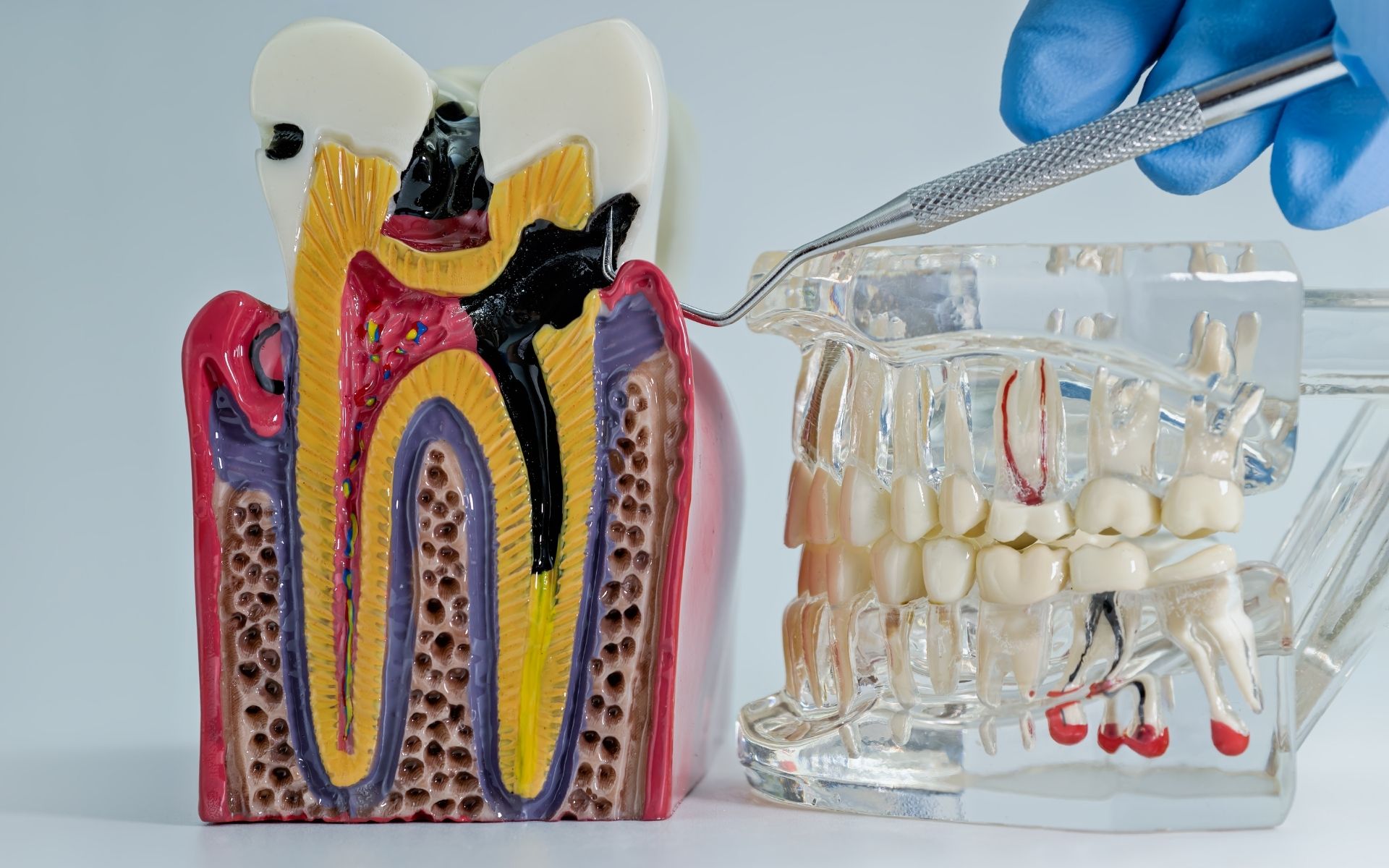
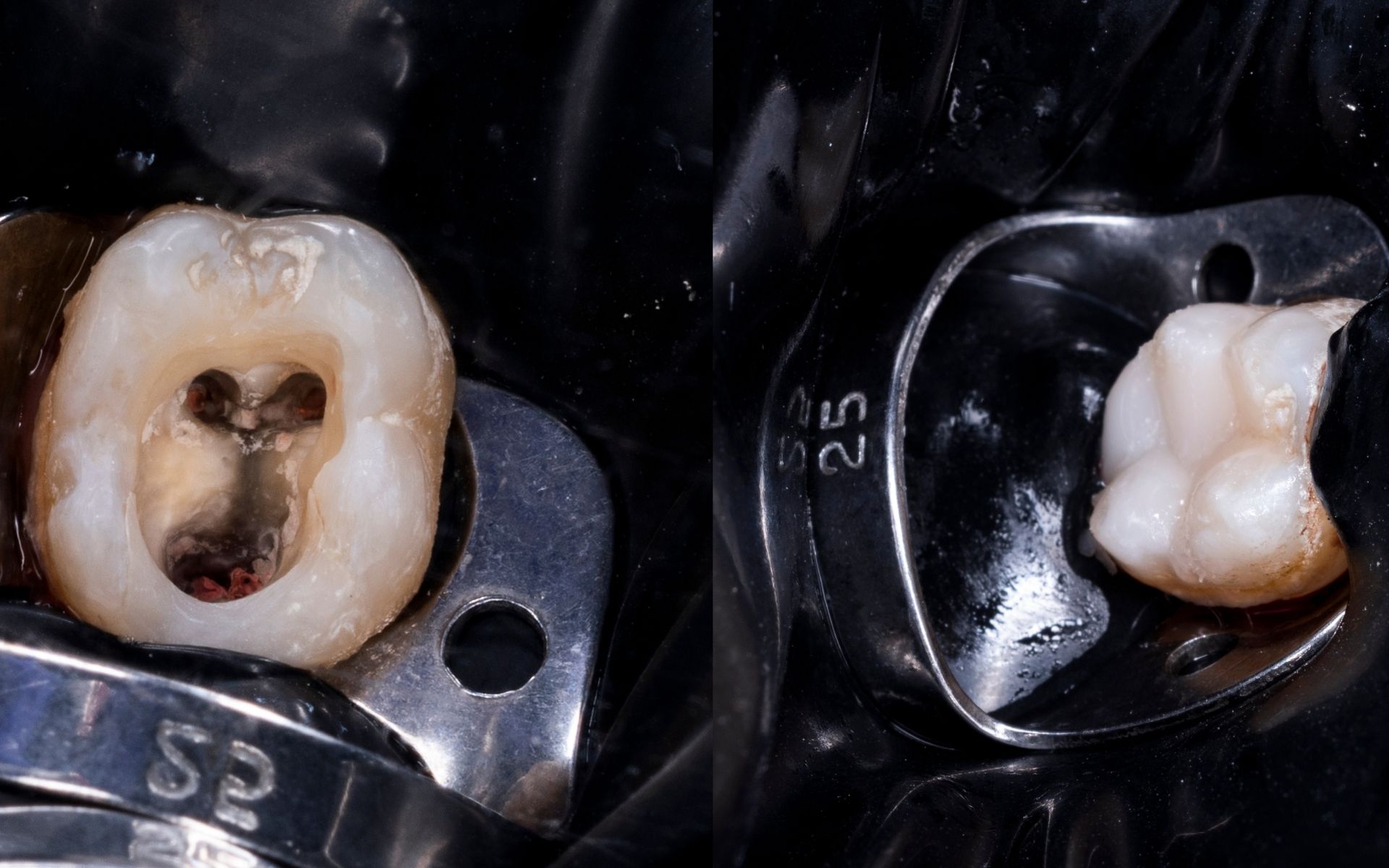
After we've confirmed the diagnosis, we isolate the tooth using a small rubber dam. It's a thin sheet that fits snugly around the tooth. Two jobs: keep saliva and bacteria out of the treatment area, and make sure no debris or rinsing solutions end up in your throat. Sounds like a small thing. It's not. A dry, contamination-free workspace lets Dr. Zhao work with real precision and dramatically cuts the chance of reinfection down the road.

Access Opening

Once you're numb and the tooth is isolated, Dr. Zhao makes a small opening through the crown to reach the pulp chamber. Back tooth? The opening goes on the chewing surface. Front tooth? It's made on the back side. She sizes this opening carefully — just big enough to reach every canal, but no bigger. Why be so particular? Because the more healthy tooth structure you preserve, the stronger and more durable your restored tooth will be long-term. That tradeoff matters.
Cleaning & Shaping

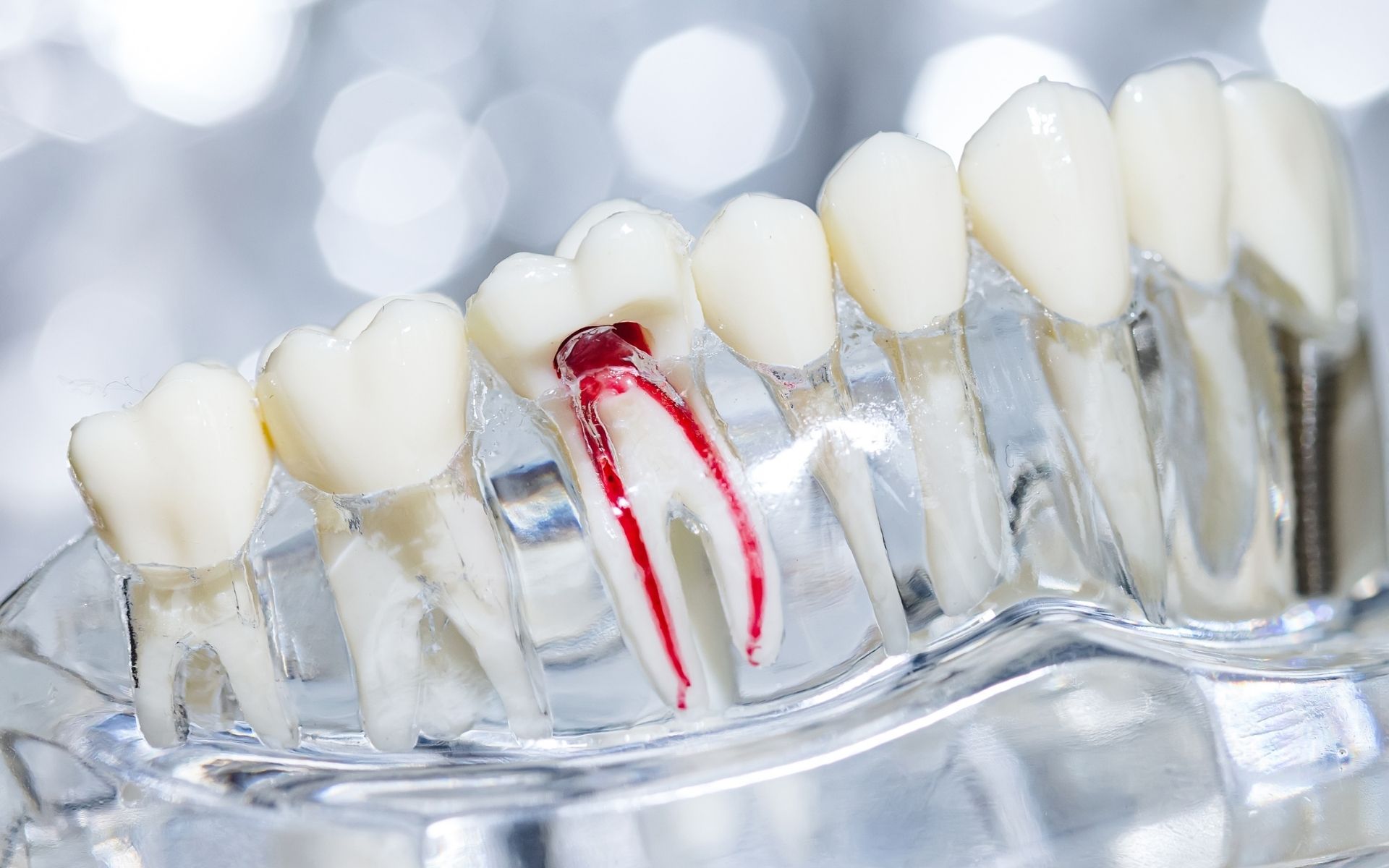
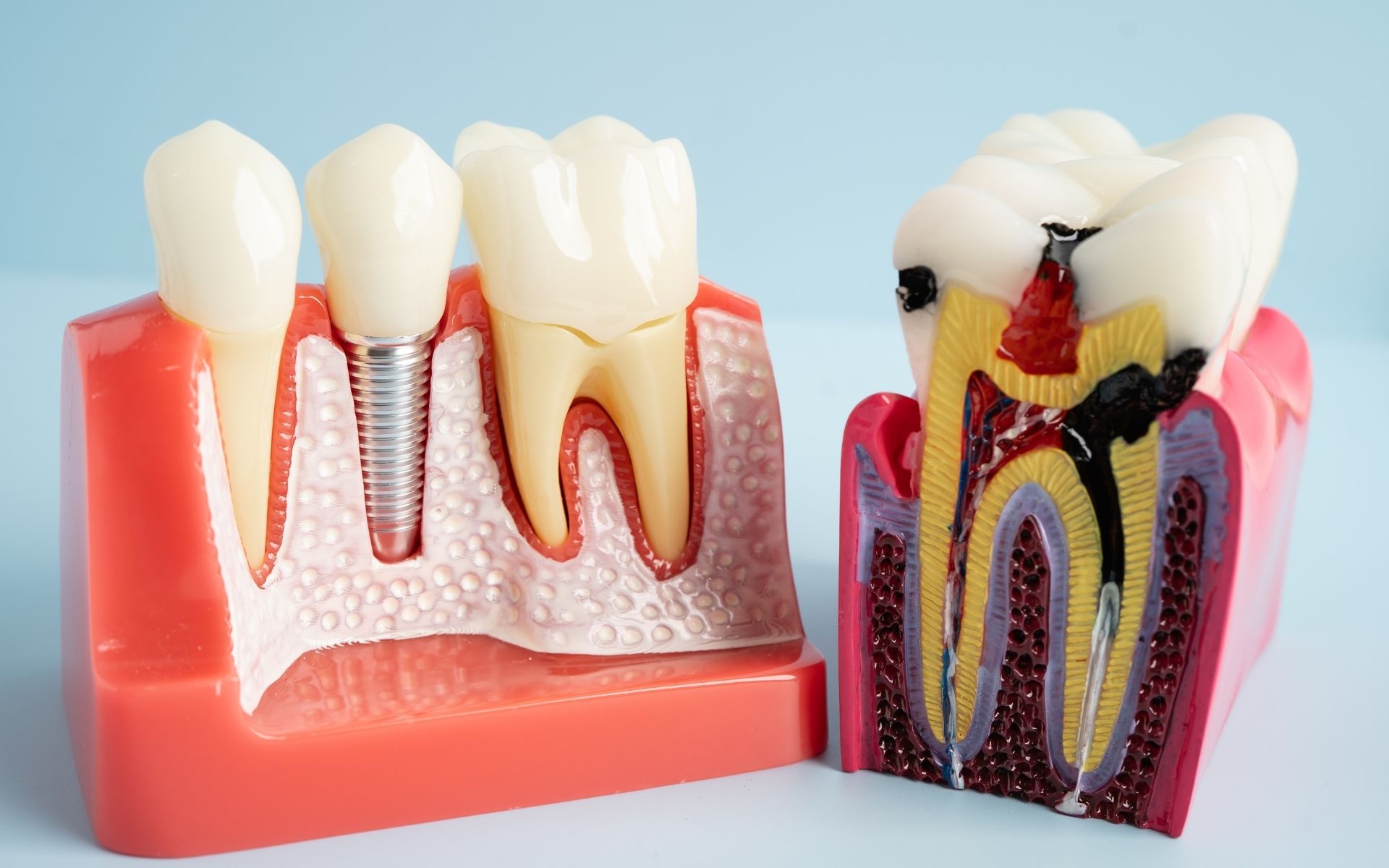
This is really the heart of the whole procedure. Dr. Zhao uses flexible, nickel-titanium instruments to carefully remove infected or dead pulp tissue from each canal. Then she shapes them into a smooth, tapered form that can be cleaned thoroughly and sealed properly. The shaping follows precise measurements from our diagnostic imaging. Every canal gets worked to a specific length — confirmed with an electronic apex locator — to make sure all the diseased tissue is gone without going past the root tip. Honestly, this level of detail is what separates an okay root canal from one that lasts you a lifetime.
Disinfection & Medication

Clean and shaped canals get flushed with strong antimicrobial solutions — usually sodium hypochlorite — to wipe out any bacteria that's still hanging around. Sometimes we'll also place an intracanal medicament like calcium hydroxide, which keeps killing bacteria between visits if we need a two-appointment approach. We don't cut corners on this step. Ever. Research in the Journal of Endodontics consistently shows that how well you disinfect the canals is the single biggest predictor of long-term success. So we take our time here, because rushing through disinfection creates problems later.
Root Canal Filling

Once everything's clean, dry, and infection-free, we fill the canals with gutta-percha — a biocompatible, rubber-like material. It gets heated and compressed into the canals along with a sealer, creating a tight three-dimensional seal that locks bacteria out for good. That seal needs to run from the top of the canal to just short of the root tip. Get it right, and a root canal can genuinely last a lifetime. We always take post-treatment X-rays to confirm every canal is properly filled before moving on.
Tooth Restoration

Here's something people don't always think about. A root canal removes the nerve and blood supply, which means the tooth gradually becomes more brittle. That's why most treated teeth — especially molars and premolars — need a dental crown to protect against fracture. Dr. Zhao will walk you through the best option for your specific tooth. Front teeth? Sometimes a direct filling does the job. But back teeth that take heavy chewing forces? A custom crown gives you the strength and durability to keep that tooth working for decades. Take a look at our full range of restorative and general dental services to see how each treatment fits together to protect your oral health.


Gentle Solutions for Growing Smiles

Pulp Therapy: Protecting Young and Injured Teeth

Pulp therapy is kind of an umbrella term. It covers several endodontic treatments designed to save a tooth when the pulp is compromised but not completely beyond help. Unlike a full root canal that removes everything, pulp therapy can sometimes preserve part of the living tissue. This is a big deal for kids whose teeth are still developing.

For our younger Tracy patients, pulp therapy usually means a pulpotomy or a pulpectomy. A pulpotomy takes out just the infected portion of pulp in the crown while leaving healthy root pulp alone. A pulpectomy goes further — removing pulp from the crown and roots — kind of like a root canal but adapted specifically for baby teeth.

And here’s why it matters so much. Baby teeth aren’t just placeholders. They guide permanent teeth into the right position, support jaw development, and help kids chew and speak normally. Lose one too early and you’re looking at crowding, misalignment, maybe orthodontic work down the line. With so many young families in Tracy, we see a steady stream of kids who need pulp therapy, and Dr. Zhao’s gentle approach really does help them feel safe through the whole thing.

Adults can benefit from pulp therapy too. Vital pulp therapy (VPT) is a newer approach with growing clinical evidence behind it. Say a cavity gets really close to the pulp but hasn’t caused irreversible damage — a biocompatible material like mineral trioxide aggregate (MTA) can be placed over the exposed pulp to encourage healing. Sometimes this prevents the need for a full root canal entirely, which means the tooth keeps its vitality and natural strength.

When to Seek Expert Care

Signs You May Need Endodontic Treatment

People ask us this all the time: “How do I know if I need a root canal?” The thing is, symptoms can range from painfully obvious to weirdly subtle. Here are the warning signs every Tracy resident should keep on their radar.

  • Persistent toothache: Pain that hangs around after eating or drinking — especially with hot or cold stuff — often means the pulp is inflamed. That dull, throbbing ache keeping you up at night? Classic sign.
  • Sensitivity to heat: Cold sensitivity can come from a bunch of different things. But if hot food or drinks cause lingering pain for more than 30 seconds, that usually points to irreversible pulp damage.
  • Swelling or tenderness in the gums: Notice a small bump near the root of a tooth (sometimes called a “gum boil” or fistula)? That’s typically an abscess, and it needs attention.
  • Darkening of the tooth: A tooth turning gray, brown, or dark yellow might have a dying or dead nerve inside. What happens is blood breakdown products seep into the dentin and cause discoloration.
  • Pain when biting or chewing: Sharp pain when you press down on one specific tooth can mean a cracked root or an infection at the tip.
  • A chipped or cracked tooth: Sports injuries, accidents, biting into something unexpectedly hard — all of it can expose the pulp to bacteria. Even invisible cracks can create a pathway for infection to sneak in.
  • Previous dental work on the same tooth: Teeth with multiple fillings or large restorations are more vulnerable because each round of work brings instruments and materials closer to the nerve.


But here’s the catch — not every toothache means root canal, and not every tooth that needs one actually hurts. Some infections develop completely silently and only show up during routine exams and digital X-rays. That’s a huge reason why regular checkups matter so much, especially in a community like Tracy where active lifestyles and packed family calendars make it tempting to push dental visits off.

If you’re noticing any of these symptoms, don’t sit on it. Waiting gives the infection time to spread into the surrounding bone and tissues, and what could’ve been a straightforward fix turns into an emergency. Dr. Zhao keeps an emergency phone line open specifically so Tracy patients can always reach us when it counts.

Your Experience at Smiles Dental Spa

Many dental conditions develop quietly, without pain or obvious warning signs. Regular exams and modern diagnostic tools help detect subtle changes, including plaque and tartar buildup, so we can act early with effective dental cleaning and care.

At Smiles Dental Spa, your trusted Tracy dentist, prevention is at the heart of everything we do. We provide thorough evaluations, clear communication, and individualized care so you understand your oral health and feel confident in your treatment plan.

Comfortable and Compassionate Care

Why Choose Smiles Dental Spa for Endodontics?

Compassionate Care

Skilled, gentle care focused on patient experience and comfort

Advanced Technology

Advanced digital imaging and dental dam isolation

Minimally Invasive Techniques

Modern, minimally invasive types of oral surgery and root canal technology

Family & Cosmetic Experise

Personalized treatment plans for adults and children

Convenient Location

Convenient location in Tracy, CA, with easy appointment booking via NexHealth

Frequently Asked Questions:

Is a root canal painful?

Most patients report that a root canal feels similar to getting a filling. We use local anesthesia and offer nitrous oxide sedation to keep you comfortable throughout the procedure. The pain you feel before treatment, from the infection itself, is almost always far worse than anything you experience during the root canal.

How long does a root canal take?

A straightforward root canal on a front tooth typically takes 45 to 60 minutes. Molars with multiple canals may require 60 to 90 minutes, and occasionally a second visit is needed for complex cases. Dr. Zhao uses 3D imaging to plan efficiently, which helps minimize chair time.

Can a child need a root canal?

Children don’t typically receive traditional root canals, but they may need pulp therapy such as a pulpotomy or pulpectomy to save an infected baby tooth. Preserving baby teeth is important for proper jaw development and spacing for permanent teeth.

How much does a root canal cost in Tracy?

The cost varies depending on which tooth is affected and the complexity of the case. Front teeth are generally less expensive than molars. We provide detailed cost estimates before treatment begins and work with most dental insurance plans to maximize your benefits.

What happens if I don't get a root canal when I need one?

Untreated pulp infections can spread to the jawbone, form abscesses, and lead to tooth loss. In rare cases, the infection can become a serious systemic health concern. Early treatment is always simpler, more affordable, and more predictable than waiting until the problem escalates.

How long does a root canal-treated tooth last?

With proper restoration, typically a dental crown, and good oral hygiene, a root canal-treated tooth can last a lifetime. Studies show that teeth restored with crowns after root canal therapy have significantly higher long-term survival rates than those restored with fillings alone.

Testimonials

Hear From Our Patients

We thrive on patient feedback! See what your neighbors in Tracy have to say about their experience, and if you have a moment, please leave us a review—we appreciate you taking the time!

Visit Us Today

Schedule Your Endodontic Consultation Today

Prevent dental pain or a worsening infected tooth by seeking prompt care. Save your natural tooth and relieve discomfort with expert endodontic care from Dr. Shirley Zhao, your Tracy general dentist, at Smiles Dental Spa.

Call (209) 836-1748 or book your consultation online via NexHealth today. Visit us at 1431 N Tracy Blvd, Tracy, CA 95376—where compassionate care meets cutting-edge dental solutions and the highest standard of oral health.

Location

1431 N Tracy Blvd
Tracy, CA 95376