



Every year on March 20th, the world pauses to recognize World Oral Health Day. It is a global initiative that serves as a powerful reminder: oral health is not a luxury; it is a universal human right and a fundamental pillar of your overall physical and mental wellness.
At Smiles Dental Tracy, Dr. Shirley Zhao and our team believe that a healthy smile is the foundation of a vibrant life. However, for many, the mouth is often treated as separate from the rest of the body. We tend to wait until something hurts before we seek care. In honor of Oral Health Awareness Month this March, we are shifting the narrative.
Your mouth is the gateway to your body. Ignoring it doesn’t just lead to cavities; it has profound consequences for your heart, your brain, and your daily quality of life. To help you join this global movement, Dr. Zhao has curated a science backed dental wellness checklist featuring five actionable steps you can start today to strengthen your smile and safeguard your long term health.
The Mind Mouth Connection: Why Your Smile Dictates Your Mood
When we talk about “healthy mouth, healthy mind,” we aren’t just using a catchy phrase. The link between your dental status and your mental wellbeing is backed by rigorous clinical research.
Confidence, Shame, and Social Isolation
TheWorld Dental Federation (FDI) has frequently highlighted how oral health impacts psychological health. If you are struggling with tooth decay, persistent bad breath (halitosis), or missing teeth, you likely know the feeling of “guarding” your mouth. You might cover your mouth when you laugh or avoid social gatherings altogether.
Recent systematic reviews on Oral Health, Loneliness, and Social Isolation show a clear cycle: poor oral health leads to embarrassment, which leads to social withdrawal. This isolation is a known risk factor for depression and cognitive decline. By restoring your smile, you aren’t just fixing teeth; you are restoring your ability to connect with the world.
The Burden of Chronic Pain and Stress
Untreated dental issues, like abscesses, cracked teeth, or advanced gum disease, create a baseline of chronic, low grade pain. This constant “noise” in your nervous system triggers the body’s stress response, elevating cortisol levels and disrupting sleep patterns. Alleviating dental problems often provides an immediate “mental lift,” removing a significant source of daily biological stress.
The 5 Step Dental Wellness Checklist for 2026
To celebrate World Oral Health Day 2026, use this strengthened smile guide to audit your current habits. These five steps are the most effective ways to ensure your mouth remains a gateway to health, not disease.
1. The Gold Standard: Brush Twice, Floss Once
Consistency is where most people falter. To meet global standards:
- Brush for two minutes: Use a soft bristled brush and fluoride toothpaste.
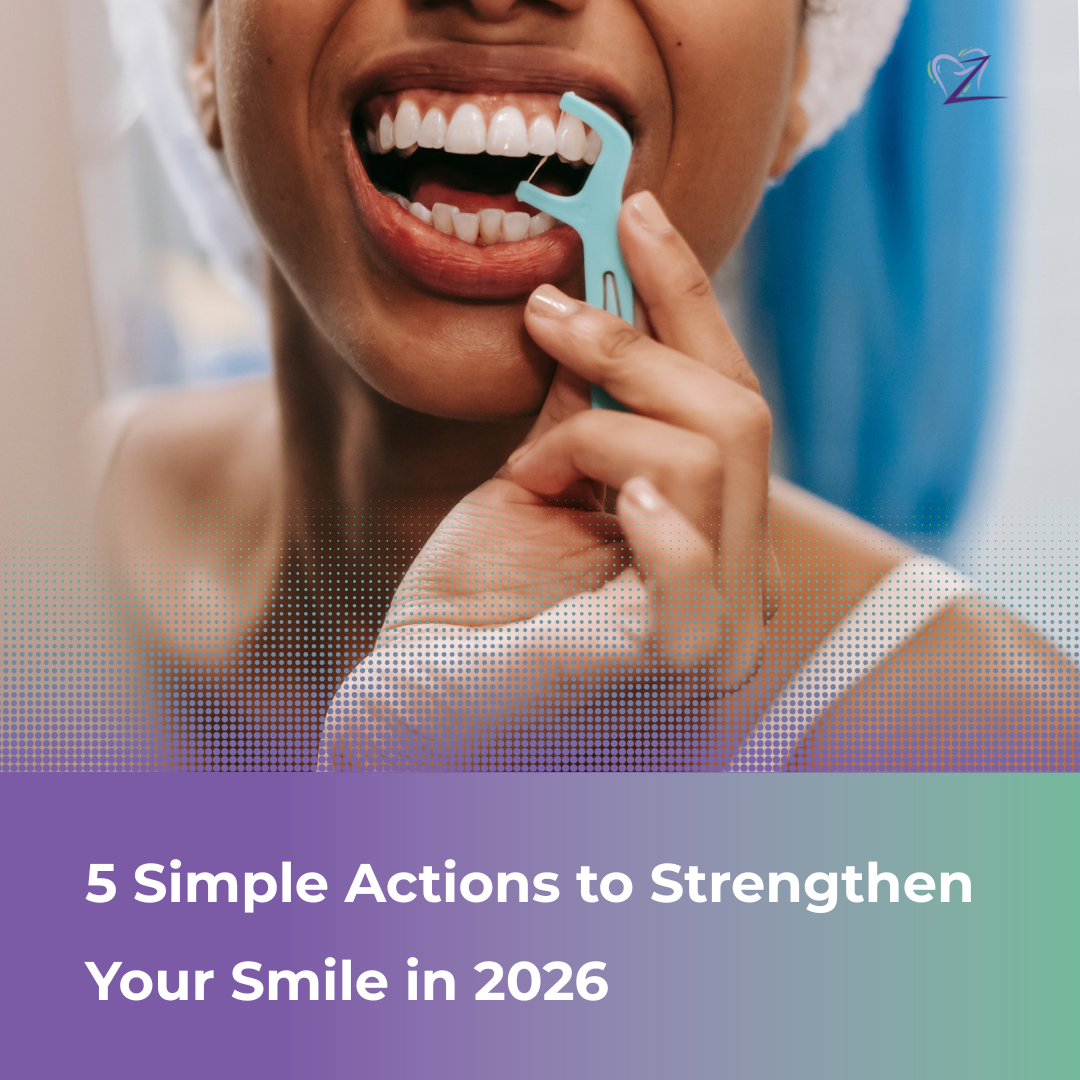
- The 40% Rule: Brushing only cleans about 60% of your tooth surfaces; if you don’t floss, you leave 40% of the plaque behind.
- Timing: Brushing right before bed is the most critical time, as saliva flow decreases during sleep.
2. Manage Your “Sugar Frequency”
The frequency of sugar exposure is much more damaging than the amount. Bacteria produce acid that attacks your enamel for about 20 minutes after eating sugar. Stick to set mealtimes and rinse with water afterward to allow saliva to neutralize these acids.
3. Prioritize Professional Oversight
Even diligent brushers cannot remove tartar (calculus) once it has hardened. Only a professional dental cleaning can scale away these deposits. Dr. Zhao also performs screenings for oral cancer, structural micro cracks, and reversible gum disease.

4. Listen to Your Gums
Healthy gums should be firm and pink; they should never bleed during normal brushing. “Pink in the sink” is a clinical sign of gingivitis. Improving your technique and visiting us for a deep cleaning (scaling and root planing) can stop the infection before it turns into permanent bone loss.
5. Recognize the Systemic Connection
Severe gum disease (periodontitis) is a chronic inflammatory condition linked to:
- Cardiovascular Disease: Bacteria can contribute to the clogging of arteries.
- Diabetes: Gum disease can make it harder to control blood sugar levels.
- Pregnancy Complications: Inflammation has been linked to low birth weight and preterm birth.
Overcoming Barriers to Professional Dental Care
Many avoid the dentist due to dental anxiety, high costs, or a lack of information. At Smiles Dental Tracy, we dismantle these barriers through:
- Education: We use digital imaging so you can see exactly what Dr. Zhao sees.
- Compassion: We offer a judgment free environment, regardless of how long it has been since your last visit.
- Accessibility: We maximize insurance benefits and provide transparent pricing for affordable preventative care.
Commit to a Healthier You
This World Oral Health Day, look at your smile as a vital organ system. By following this 5 step checklist, you are protecting your heart, your mind, and your future.
Ready to prioritize your wellness?
Celebrate Oral Health Awareness Month by booking your comprehensive check up with Dr. Shirley Zhao, DDS, at Smiles Dental Tracy today!
📞 Call us today at (209) 585-1475