




SERVICES
Pulp Therapy in Tracy
Oral Exams
What Pulp Therapy Actually Does for a Child's Tooth
Every baby tooth has living tissue inside it. That’s the pulp. It holds nerves and blood vessels that helped the tooth grow in the first place. When decay reaches that inner layer, the tooth doesn’t just hurt. It’s actively infected.
Pulp therapy removes the damaged or infected portion of that tissue while keeping the rest of the tooth intact. Think of it like this: instead of pulling the whole tooth out, we go in and clean out only the problem area. The tooth stays in place. It keeps doing its job.


Your Trusted Tracy Dentist
Since 2013
And that job matters more than most parents realize. Baby teeth hold space for adult teeth. They guide permanent teeth into the right position as your child’s jaw grows. Pull a baby tooth too early and the neighbors start shifting, we see it happen all the time at our office on Tracy Blvd in Tracy. That shift can lead to crowding, misalignment, and bigger problems down the road.
So what does the actual procedure look like? Here’s how we handle it:
- We numb the area so your child feels zero pain during the process.
- We remove the decayed part of the tooth to access the pulp chamber.
- We take out only the infected pulp tissue, leaving healthy tissue when possible.
- We place a medicated material inside to calm the remaining pulp and prevent new infection.
- We seal the tooth and protect it with a crown to restore its strength.
The whole thing usually takes one visit. Most kids do great, better than their parents expect.
In the vast majority of cases, the tooth we save with pulp therapy lasts until the permanent tooth is ready to come through on its own schedule. According to the American Academy of Pediatric Dentistry, preserving primary teeth through pulp therapy supports normal development of the dental arch and bite. That’s not a small thing. It can save families from orthodontic headaches later.
But here’s what parents really want to know. Will my kid be okay? Yes. We do this every single week. Your child walks out with a tooth that works, feels normal, and stays put until nature says it’s time to go.
Educational
Signs Your Child May Need Pulp Therapy Before Pain Starts
Most parents assume they’ll know when something’s wrong with their child’s tooth. They expect crying, complaints, or a refusal to eat. But here’s what we see at our office on 1431 N Tracy Blvd Tracy almost every week: kids who need pulp therapy don’t always show obvious pain.
The early signs are subtle. Easy to miss.
A tooth that looks slightly darker than the ones around it is one of the biggest red flags. That color change means the nerve tissue inside is breaking down, it’s already happening before your child feels a thing. You might also notice a small bump on the gum near a baby tooth. That bump looks like a pimple, and it tells us infection has reached the pulp.
Here are the signs we tell Tracy parents to watch for:
- A single tooth turning gray, yellow, or brown without any injury you remember
- Sensitivity to hot or cold drinks that lingers more than a few seconds
- Swelling along the gumline near one specific tooth
- Your child chewing only on one side of their mouth
- A cavity that keeps coming back or getting deeper despite good brushing
Most families we see in our Lincoln West neighborhood catch these signs during a routine pediatric oral examination. That’s why those regular visits matter so much. A small dark spot on an X-ray can show us nerve involvement months before your child ever complains.
And sometimes there’s no visible sign at all. We’ve caught pulp problems during digital dental X-rays on kids who came in feeling perfectly fine. The decay had quietly reached the nerve through the inside of the tooth.
So what should you actually do if you notice any of these? Don’t wait for pain to confirm your gut feeling. Pain means the problem has progressed further than we’d like. Call us and let our team take a look. A quick exam can tell us whether pulp therapy is needed or if we’re dealing with something simpler like a standard pediatric filling. Either way, catching it early gives your child’s tooth the best chance.
What Happens During a Pulp Therapy Appointment at Our Tracy Office
Most parents feel better once they know exactly what’s going to happen. So here’s the honest walkthrough, step by step, the same way we’d explain it to you in person at 1431 N Tracy Blvd Tracy.
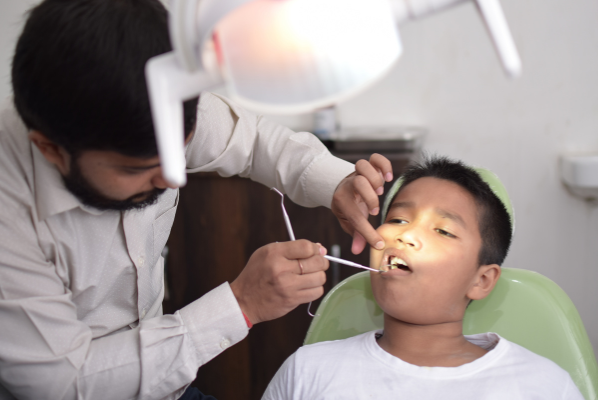
Your child’s comfort comes first. We don’t rush. Before anything starts, we talk to your kid in words they can understand. No scary terms. We let them see the tools, ask questions, and settle in. If they’re anxious, we offer nitrous oxide to take the edge off.
Once they’re relaxed, here’s how the appointment flows:
- We numb the area around the tooth so your child won’t feel a thing during the procedure.
- We isolate the tooth to keep it dry and clean while we work.
- We remove the damaged or infected pulp tissue from inside the tooth. For a pulpotomy, that’s just the top portion. A pulpectomy goes deeper into the root canals.
- We place a medicated material inside the tooth to help it heal and prevent new infection.
- We seal the tooth and usually recommend a dental crown to protect what’s left of the structure.
The whole thing typically takes 30 to 45 minutes. One visit, most of the time.
Kids almost always do way better than their parents expect. They walk out smiling, sometimes asking for their prize from the treasure box before we even finish the paperwork. And, that’s the best part of this job.
After the appointment, you might notice mild soreness for a day or two. That’s normal. A children’s pain reliever handles it. We’ll go over aftercare instructions before you leave, no guessing involved.
But here’s what matters most. The tooth stays. Your child keeps eating, talking, and growing without a gap where that tooth should be. The space stays protected until the adult tooth is ready to come through on its own schedule. That’s the whole point of pulp therapy, saving what’s already there so nothing else gets disrupted down the road.
What to Expect After Pulp Therapy and How to Help Your Child Recover
Most kids bounce back fast. That’s the honest truth we share with parents every single day at our office on 1431 N Tracy Blvd Tracy.
Right after pulp therapy, your child’s mouth will still be numb for about one to two hours. This is the trickiest part. Kids don’t understand that numb feeling, they want to chew on their lip or tongue. Watch them closely until the numbness wears off. A little distraction goes a long way. Put on their favorite show or hand them a tablet.
The First 24 Hours
Some mild soreness is normal. You might notice your child doesn’t want to eat much that first evening. That’s fine. Stick to soft foods and cool drinks. Avoid anything crunchy, hot, or sticky for at least a day or two. Here’s what we tell families to keep on hand:
- Children’s ibuprofen or acetaminophen (follow the dosage on the box)
- Soft foods like yogurt, applesauce, mashed potatoes, or smoothies
- A cold pack wrapped in a cloth if there’s any mild swelling
The large majority of kids are back to their normal selves by the next morning. But if your child has a low fever or seems extra fussy that first night, don’t panic. It usually passes quickly.
So when should you actually call us? If swelling gets worse after 48 hours. If your child spikes a high fever. Or if pain doesn’t improve with over-the-counter medicine. Those are signs we want to hear about right away.
And here’s something parents in the Lincoln neighborhood often ask about. The tooth that received pulp therapy will eventually fall out on its own if it’s a baby tooth. The treatment keeps it healthy and in place until the adult tooth is ready to come through. That’s the whole goal.
We’ll schedule a follow-up visit at 1431 N Tracy Blvd Tracy to check healing, usually within a few weeks. We take a quick look, maybe snap a digital dental x-ray, and make sure everything is on track. Most follow-ups take less than fifteen minutes. Your child won’t even have time to get bored in the waiting room.
Recovery from pulp therapy really is simple when you know what to watch for.
Why Delaying Pulp Therapy Puts the Permanent Tooth at Risk
We hear it a lot. “It’s just a baby tooth. It’ll fall out anyway.” And, we get why parents think that. But here’s what most folks don’t realize: baby teeth are holding space for the adult teeth growing underneath.
When infection from a damaged pulp spreads, it doesn’t just stay in that one tooth. It moves into the bone. Into the tissue around the developing permanent tooth bud. According to the American Academy of Pediatric Dentistry, untreated pulp infections in primary teeth can damage or displace the permanent teeth waiting to erupt. That’s not a small deal.
Think about it this way. Your child’s baby molar might not fall out naturally until age 11 or 12. That’s years of holding the spot open so the adult tooth can come in straight. Lose that tooth too early and the neighboring teeth start to drift. Now you’ve got a crowding problem, a bite problem, maybe even the need for a space maintainer that could’ve been avoided entirely.
We see families in Tracy, especially around the Lincoln neighborhood, who waited a few months hoping the pain would stop on its own. By the time they come to our office on 1431 N Tracy Blvd Tracy, the infection has spread enough that a simple pulpotomy is no longer an option. Sometimes the tooth needs a full pulpectomy. Sometimes it needs to come out.
Here’s what can happen when pulp therapy gets delayed too long:
- An abscess forms at the root tip, causing facial swelling and serious pain
- Infection reaches the developing permanent tooth, causing enamel defects or malformation
- Early tooth loss leads to shifting, crowding, and orthodontic issues down the road
- What started as a minor procedure turns into an emergency extraction
Parents who waited almost always tell us they wish they’d come in sooner. The signs were there. A tooth that hurt off and on, sensitivity to warm food, a little bump on the gums that kept coming back. Those aren’t things kids outgrow.
So if your child has been complaining, don’t wait for it to get worse. Early pulp therapy protects the tooth that’s there now and the one that’s coming next.
FAQ
Common Questions
What is pulp therapy and does my child really need it?
Pulp therapy removes infected tissue from inside a baby tooth so the tooth can stay in place. Baby teeth hold space for adult teeth. If we pull one too early, nearby teeth shift and crowding can follow. Pulp therapy lets the tooth do its job until the permanent tooth is ready. Most kids in Tracy who get it done early avoid bigger dental problems later. It is a simple, one-visit procedure that protects your child’s smile long-term.
How do I know if my child needs pulp therapy before they start complaining of pain?
A tooth turning gray, yellow, or brown is one of the biggest warning signs. You might also see a small pimple-like bump on the gum near a baby tooth. Your child may chew only on one side or avoid cold drinks. Pain often comes late, after the infection has already spread deeper. If you notice any of these signs, call us before waiting for things to get worse. Catching it early gives the tooth the best chance.
What should I expect during our visit to your office at 1431 N Tracy Blvd Tracy?
Your child’s comfort comes first at our 1431 N Tracy Blvd Tracy office. We explain everything in simple words before we start. We numb the area completely so there is no pain during the procedure. The appointment usually takes 30 to 45 minutes from start to finish. Most kids walk out smiling and head straight for the treasure box. You will get clear aftercare instructions before you leave, so there is no guessing at home.
Is pulp therapy safe for baby teeth, and will it hurt my child?
Yes, pulp therapy is safe and your child should not feel pain during the procedure. We numb the area fully before we begin. If your child is anxious, we also offer nitrous oxide to help them relax. The American Academy of Pediatric Dentistry supports pulp therapy as a proven way to save primary teeth. Mild soreness for a day or two after is normal and easy to manage with a children’s pain reliever.
How does Tracy's climate affect my child's tooth decay risk?
Tracy’s hot, dry summers can lead kids to drink more sugary sports drinks and juices to stay cool. That extra sugar exposure speeds up decay, especially in baby teeth. We see this pattern at our office on N Tracy Blvd every summer. Rinsing with water after sugary drinks helps a lot. Regular checkups let us catch decay early before it reaches the pulp, which means simpler treatment and less time in the chair for your child.
What happens after pulp therapy — how long will the treated tooth last?
After pulp therapy, the treated tooth is sealed and usually protected with a dental crown. It should stay in place until the adult tooth naturally pushes it out. In most cases, that means the tooth lasts until your child is between 10 and 12 years old, depending on which tooth it is. We monitor the tooth at regular visits to make sure everything is healing well. The goal is simple: keep the space open and let nature handle the rest.
Visit Us Today
Schedule an Appointment for Pulp Therapy
Maintain the stability and appearance of your newly aligned smile. Contact Smiles Dental Spa to schedule an appointment for dental retainers and space maintainers with Dr. Shirley Zhao.
Contact our office at (209) 836-1748 or conveniently schedule your appointment online through NexHealth. Visit us at 1431 N Tracy Blvd, Tracy, CA 95376—trusted care tailored for your family.

Phone

Location
1431 N Tracy Blvd
Tracy, CA 95376