




SERVICES
Implant Supported Dentures in Tracy, CA
Trusted Oral Surgery
What Implant Supported Dentures Actually Do
Regular dentures sit on your gums. That’s it. They rely on suction or adhesive paste to stay put. And, for a lot of folks who walk into our office on Tracy Blvd, that setup stopped working a long time ago.
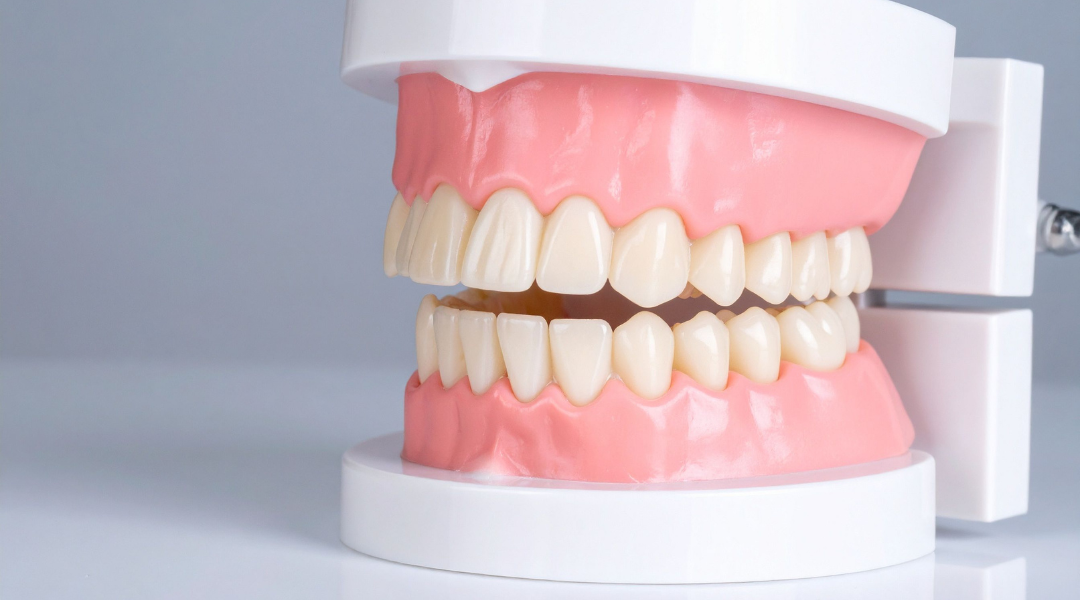
Implant supported dentures are different. Small titanium posts go into your jawbone. Once those posts heal and fuse with the bone, a full denture snaps or screws right onto them. The result is a set of teeth that doesn’t shift when you eat, doesn’t pop loose when you laugh, doesn’t need adhesive cream ever again.


Your Trusted Tracy Dentist
Since 2013
Think of it this way. The implants act like artificial tooth roots. They give your denture a foundation that’s actually anchored to bone instead of just resting on soft tissue. The American College of Prosthodontists reports that over 36 million Americans have no remaining teeth. A huge number of those people struggle daily with loose-fitting dentures. This fixes that problem at the source.
Here’s what implant supported dentures handle that traditional ones can’t:
- Biting into firm foods like apples, corn on the cob, crusty bread
- Speaking clearly without worrying about slippage mid-sentence
- Stopping the bone loss that happens when your jaw has nothing to hold onto
- Eliminating sore spots from dentures rocking against your gums
That bone loss piece is huge. We see it constantly. Someone’s worn traditional dentures for ten years, their jawbone has shrunk, and now nothing fits right anymore. The face starts to look sunken. Implants actually stimulate the bone the same way natural roots do, so that process slows way down.
Most patients at our Tracy office need somewhere between two and six implants per arch. It depends on your bone density and the type of attachment system that makes sense for your mouth. Some designs are removable for cleaning. Others stay fixed in place permanently. We figure out which approach works best during your exam, usually with help from our 3D dental imaging.
But the bottom line is simple. Your denture locks in. You stop thinking about it. You just live your life.
Educational
Signs Your Current Dentures Are No Longer Working
Maybe your dentures slide when you laugh. Maybe you’ve stopped ordering certain foods because chewing feels like a chore. We hear this from patients at our office on Tracy Blvd every single week. People come in frustrated, sometimes embarrassed, and almost always surprised to learn they don’t have to keep living that way. Traditional dentures lose their fit over time because your jawbone changes shape after teeth are removed. That’s not a flaw in the denture. It’s just biology.
But knowing why doesn’t make it less annoying.
Here are the signs we see most often when it’s time for implant supported dentures:
- Your dentures rock or shift when you talk, eat, or smile
- You’re using more adhesive paste than you did a year ago
- Sore spots keep showing up on your gums, especially along the ridges
- Your face looks sunken or older than it should
- You avoid social meals or skip foods you used to enjoy
That last one hits hard. Nine times out of ten, the patient sitting in our chair near downtown Tracy tells us they stopped eating steak, apples, corn on the cob. They’ve quietly adjusted their whole life around a denture that doesn’t hold up anymore. And the bone loss behind it just keeps getting worse.
Here’s something most people don’t realize. When your jaw shrinks from missing tooth roots, your denture fit changes faster. So you apply more adhesive. The adhesive masks the poor fit. The poor fit causes more irritation. It’s a cycle that only goes in one direction.
Some patients also notice a clicking sound when they speak. Others feel their lower denture float during meals. Not sure if what you’re dealing with counts? That’s actually pretty common. Most folks assume loose dentures are just something you live with after a certain age.
You don’t have to. Prosthodontic research shows implant supported options can restore nearly all of your original chewing ability. That’s a big deal when you’ve spent years working around limitations you thought were permanent.
How the Implant Supported Denture Process Works Step by Step
People always ask us how long this takes. Fair question. The process has several stages, but none of them are as scary as you might think. Here’s exactly what happens when you come to our office on N Tracy Blvd in Tracy for implant supported dentures.
- Initial exam and 3D dental imaging. We take a full look at your jawbone, gums, and remaining teeth. Our 3D imaging shows us bone density and nerve locations so we can plan implant placement down to the millimeter.
- Treatment planning. We map out how many implants you’ll need and where they go. Some patients need bone grafting first if the jaw has thinned out. We’ll tell you upfront.
- Implant placement surgery. Small titanium posts go into the jawbone. We use nitrous oxide to keep you comfortable. Most folks say it’s easier than they expected.
- Healing period. This is the part that takes patience. Your bone fuses around the implants over several months, that bond is what makes everything rock solid. We check your progress at regular visits.
- Abutment attachment. Once the implants have integrated with the bone, we attach small connector pieces. Quick appointment.
- Final denture fitting. Your custom denture snaps or screws onto the implants. We adjust the bite, check your comfort, and make sure everything looks right.
If we find bone loss during that first scan, we don’t just push forward and hope for the best. We’ll recommend a bone graft or sinus lift first so the implants have a strong foundation. Skipping that step is how failures happen at other offices.
We see patients from the Banta and Lincoln neighborhoods who’ve been told they “can’t get implants” because of bone loss. That’s usually not true. It just means there’s an extra step before placement. And that extra step makes all the difference between implant supported dentures that last decades and ones that fail in a few years.
The whole process from first visit to final denture typically runs four to eight months. Some cases move faster. Every mouth is different.
Who Qualifies for Implant Supported Dentures If You Have Bone Loss
This is the question we hear most often at our office on 1431 N Tracy Blvd Tracy. “I was told I don’t have enough bone.” And, that’s not always the end of the story.
Most adults who’ve lost teeth are candidates for implant supported dentures. But there are a few things we need to check first. Your jawbone density matters. So does your overall health. We look at gum condition, medical history, and how long you’ve been without teeth. The longer teeth have been missing, the more bone tends to shrink. That’s just how the body works.
Good Candidates Usually Share These Traits
- Enough jawbone to support four to six implant posts
- Healthy gums or a willingness to treat gum disease first
- No uncontrolled diabetes or conditions that slow healing
- Non-smokers, or those willing to quit before surgery
Bone loss doesn’t automatically disqualify you. We offer bone grafting right here in Tracy, and it’s more routine than people think. A graft builds up the jawbone over several months so it can hold implants securely. For patients who’ve lost bone in the upper jaw near the sinus area, a sinus lift can create the space we need. Both procedures happen before implant placement, they give your body time to rebuild what it lost.
We also use 3D dental imaging to map your bone structure in detail. That scan shows us exactly where bone is strong and where it’s thin. Sometimes we find pockets of solid bone that a standard X-ray would miss. That changes the whole plan.
So what should you do if you’ve been told you don’t qualify? Come in for a second opinion. Patients from the Banta and Lincoln neighborhoods visit us specifically for this reason. What seemed impossible at one office becomes a clear path forward once we get the right images and measurements.
But let’s be real. Not everyone qualifies right away. Some folks need gum treatment or scaling and root planing before we can even talk about implants. That’s fine. We’d rather do it right than rush it.
The In-House Advantage for Tracy Patients
We do everything right here at 1431 N Tracy Blvd Tracy. Your 3D dental imaging, bone grafting, implant placement, and final restoration all happen in one office. No referrals across town. No starting over with a new doctor who doesn’t know your mouth.
That matters more than people realize.
When you get sent to an oral surgeon for implants and then come back to a different dentist for the denture, things can get lost in translation. The surgeon places the implants at one angle, the restorative dentist wants them somewhere else. We’ve seen patients from the West Valley area come in after exactly that situation, frustrated and confused about why their denture doesn’t feel right. Keeping everything under one roof removes that problem entirely.
Here’s what in-house care actually looks like for you:
- One doctor reviews your 3D scans and plans implant placement based on your final denture design, not the other way around
- Your surgical and restorative appointments happen in the same building with the same team
- Adjustments take minutes because we made the restoration and placed the implants ourselves
- Your records, imaging, and treatment notes live in one system
So if something feels off six months later, we pull up your file and know exactly what was done. No guesswork. No phone calls to another office asking for records.
Nine times out of ten, the patients who have the smoothest experience with implant supported dentures are the ones whose entire treatment stayed in one place. We coordinate your bone grafting timeline with your implant placement schedule. If your healing is on track, because we’re checking it ourselves. And we design your final denture around the exact implant positions we chose from day one.
Patients near Lincoln Park and downtown Tracy tell us this is the biggest reason they chose our office. Not having to drive to multiple locations or manage appointments with two or three different providers, that alone takes a huge weight off. You’ve got enough to think about. Let us handle the logistics.
Want to see how this works for your situation? Give us a call.
FAQ
Common Questions
How many implants do I actually need for implant supported dentures?
Most patients need between two and six implants per arch, depending on your bone density and the attachment system that fits your mouth best. Some designs snap on and come out for cleaning. Others stay fixed permanently. We figure this out during your exam using 3D dental imaging, which shows us your bone density and nerve locations. There is no one-size-fits-all answer, but we will tell you exactly what your mouth needs before anything starts.
How long does the full implant supported denture process take?
The process takes several months from start to finish, mostly because your jawbone needs time to fuse around the implants. The surgery itself is straightforward. The healing phase is what takes patience. Most patients at our Tracy office say the waiting period is uneventful. You go about your normal life while the bone does its job. We check your progress at regular visits and move to the final fitting once everything has healed properly.
Is there parking available when I come in for my appointment at 1431 N Tracy Blvd?
Yes, parking is easy at our location on N Tracy Blvd in Tracy. You will not need to worry about finding a spot or walking far, which matters when you are coming in for a longer appointment like an implant consultation or a fitting. If you have mobility concerns or need extra time getting in, just let us know when you call and we will make sure things go smoothly for your visit.
What should I expect after my implants are placed?
After implant placement, most patients feel mild soreness for a few days, not the intense pain many expect. You will eat soft foods during the healing period while the bone fuses around the titanium posts. We schedule follow-up visits to check your progress. Once healing is complete, we attach the connector pieces and fit your final denture. Patients at our Tracy office are often surprised by how manageable the recovery actually is.
Can implant supported dentures really stop the bone loss in my jaw?
Yes, implant supported dentures slow bone loss because the titanium posts stimulate your jawbone the same way natural tooth roots do. Traditional dentures just rest on your gums and do nothing to stop the jaw from shrinking. Over time, that shrinkage makes your face look sunken and your denture fit worse. Implants give the bone something to hold onto, which slows that process significantly. This is one of the biggest long-term benefits we see in patients here in Tracy.
What if my jawbone has already thinned out — am I still a candidate?
Thinning jawbone does not automatically disqualify you from implant supported dentures. If your 3D scan shows significant bone loss, we may recommend a bone graft or sinus lift first to build a strong foundation. We see this regularly at our office on N Tracy Blvd. Skipping that step would set you up for implant failure, so we are upfront about it from the start. Many patients who thought they were not candidates end up being great ones after proper preparation.
Visit Us Today
Schedule an Appointment for Implant Supported Dentures
Maintain the stability and appearance of your newly aligned smile. Contact Smiles Dental Spa to schedule an appointment for dental retainers and space maintainers with Dr. Shirley Zhao.
Contact our office at (209) 836-1748 or conveniently schedule your appointment online through NexHealth. Visit us at 1431 N Tracy Blvd, Tracy, CA 95376—trusted care tailored for your family.

Phone

Location
1431 N Tracy Blvd
Tracy, CA 95376