




SERVICES
3D Dental Imaging in Tracy, CA
Dental X-Rays
Why 3D Dental Imaging is the Ultimate View for Tracy Patients
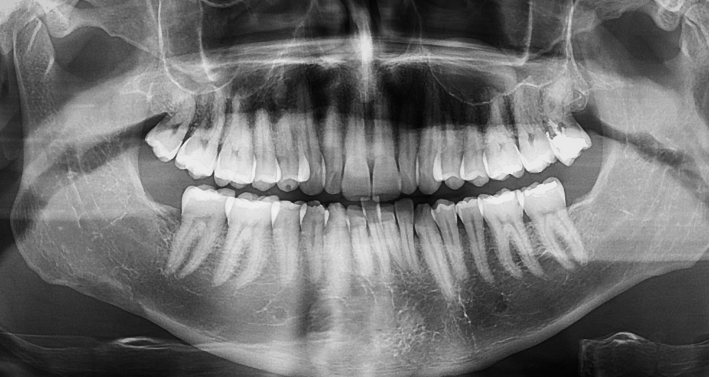
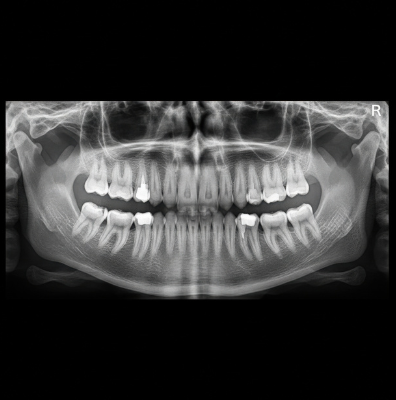
A regular dental X-ray is flat. It shows your teeth from one angle, like a photograph. But your jaw isn’t flat. Your roots curve. Your sinuses dip. Nerves run through bone in paths you can’t see on a 2D image.
That’s the whole problem.
3D dental imaging captures your entire mouth in a rotating scan that takes about 20 seconds. The result is a full three-dimensional model of your teeth, bone, nerves, and soft tissue. We can spin it, slice it, zoom in on any spot. It’s the difference between looking at a map and actually walking through the building. At our Tracy office on N Tracy Blvd, we use this technology daily because it changes how we plan treatment.

Your Trusted Tracy Dentist
Since 2013
Here’s what 3D dental imaging shows us that traditional X-rays simply miss:
- The exact thickness and density of your jawbone before dental implants or bone grafting
- Hidden infections at the tip of a root that don’t show on flat films
- The precise location of the inferior alveolar nerve, which matters before wisdom tooth removal or surgical extractions
- Extra roots, curved roots, or calcified canals before root canal therapy
- How close your sinus floor sits to your upper teeth, which is critical for a sinus lift
According to the American Dental Association, cone beam CT scans provide diagnostic information that isn’t available from any other type of dental imaging. That lines up with what we experience here in Tracy. Patients near the Lincoln neighborhood and throughout town come to us specifically because they want answers, not guesses. And when you can see the problem in three dimensions, the treatment plan gets more accurate from the start. Less guessing means fewer surprises, fewer follow-up procedures, and better results the first time around.
Educational
Conditions That Require a 3D Scan Before Treatment Can Begin
Some dental problems hide. They sit below the gumline or behind bone where a regular X-ray just can’t reach. That’s when 3D dental imaging becomes the first step, not an optional one.
We see this every single week. A patient comes in ready for implants or concerned about jaw pain, and right away it’s clear that starting treatment without a full 3D scan would be guessing. And guessing isn’t something we do with your mouth.
Here are the most common conditions where a 3D scan is required before we move forward:
- Dental implants. We need exact bone density and volume measurements. Without them, placing an implant is risky.
- Impacted wisdom teeth. The roots can wrap around nerves. A 3D scan shows us exactly where everything sits before wisdom tooth removal.
- Bone grafting or sinus lift procedures. These require precise knowledge of how much bone you have left and where your sinus floor drops.
- TMD/TMJ evaluation. Jaw joint problems involve tiny structures. Flat images miss a lot of what’s going on in that joint.
- Root canal therapy on complex teeth. Some roots curve, split, or have extra canals. The scan finds them all.
Nine times out of ten it’s the same story. A patient from the Lincoln or Banta neighborhood drives in thinking they need one thing. The 3D scan reveals something different, something that changes the whole treatment plan for the better.
According to the American Dental Association, cone beam CT scans give clinicians views that traditional radiographs simply cannot provide, especially for surgical planning. That matters when we’re talking about your jaw, your nerves, your sinuses.
So what does this mean for you? It means if you’re coming in for anything beyond a basic filling or cleaning, there’s a good chance we’ll recommend a 3D scan first. Not to add a step. To remove the surprises. The scan takes about 20 seconds, you stay comfortable the whole time, and we get a complete picture of what’s happening inside your mouth before a single instrument touches it.
But here’s what really matters. That scan protects you. It keeps your treatment safer, faster, and more predictable from day one.
What Happens During a 3D Dental Scan
You sit down. We position you. And the whole thing’s done before you’d finish scrolling your phone.
Here’s what a typical visit looks like when you come in for 3D dental imaging at our N Tracy Blvd office. No surprises, no guesswork.
- We bring you back and have you stand or sit at the scanner. There’s a small chin rest to keep you steady.
- The machine rotates once around your head. Takes about 20 seconds. You don’t feel a thing.
- Your 3D images load on our screen almost right away. We review them with you before you leave.
- If something needs attention, we talk through next steps that same visit.
That’s it. Most patients near the Lincoln neighborhood tell us they expected something way more involved. Nine times out of ten, they’re surprised it’s that quick.
There’s no tube placed inside your mouth. No biting down on uncomfortable film. The scanner stays outside your face the entire time, it just circles around you while capturing hundreds of images in one pass. Those images get stitched together into a full 3D model of your jaw, teeth, nerves, and bone. We can spin it, zoom in, slice through layers. It gives us a view that flat X-rays simply can’t match.
So what does that mean for you? It means we catch things early. Bone loss that’s just starting. A nerve sitting too close to a wisdom tooth. An infection hiding below the root line. We see it all before we ever pick up an instrument.
But here’s what really matters. You get to see it too. We turn the monitor toward you and walk through exactly what we’re looking at. No confusing gray blobs on a tiny film. Real anatomy you can actually understand. Patients tell us that moment changes everything for them, suddenly the treatment plan makes sense.
The radiation exposure is low. According to the American Dental Association, CBCT scans use far less radiation than a medical CT. We keep doses as low as possible, especially for younger patients coming in for things like wisdom tooth removal or pediatric oral examinations.
Want to see what we’re working with before your next procedure? Give us a call.
Radiation Safety and Why CBCT Is Cleared for Most Patients
This is the question we hear most often. “How much radiation are we talking about?” Fair question. And the answer usually puts people at ease fast.
A single CBCT scan produces less radiation than a traditional medical CT scan of the head. We’re talking about a fraction. According to the American Dental Association, a typical cone beam scan delivers roughly the same radiation dose as a short domestic flight or a few days of natural background exposure. That’s it.
Here’s what matters even more. The scan takes about 15 to 30 seconds. You’re in and out. The machine rotates once around your head, we get everything we need, nobody has to repeat it. Fewer retakes means less total exposure over time.
Most patients are cleared for 3D dental imaging without any issues. That includes:
- Adults planning for dental implants or tooth extractions
- Patients needing root canal therapy on complex teeth
- Kids old enough to hold still for the scan when we need bone development details
- Patients with jaw pain coming in for a TMD/TMJ evaluation
We do screen every patient first. Pregnant patients skip the scan entirely. That’s non-negotiable. For everyone else, we weigh the diagnostic benefit against the minimal exposure, and nine times out of ten the scan wins by a mile. The detail it gives us prevents guesswork during procedures, which means fewer surprises in the chair for you.
Some folks in the Lincoln neighborhood tell us they’ve been putting off dental work because a previous dentist couldn’t clearly explain what was going on. One scan changes that conversation completely. You see the image right there on screen. Your jaw, your sinuses, the bone around each tooth. Nothing hidden.
But we never push the scan on someone who doesn’t need it. If a standard digital dental X-ray gives us enough information, that’s what we’ll use. Our team only recommends CBCT when flat images can’t show us the full picture. That’s how responsible imaging works, you use the right tool for the right situation.
How Same-Visit Imaging Removes the Referral Delay for Tracy Patients
You’ve probably lived this before. Your dentist spots something on a flat X-ray, says they need a better look, and hands you a referral slip. Now you’re calling an imaging center, waiting two weeks for an opening, driving across town, then waiting again for results to get sent back. The whole thing eats up a month before anyone even starts talking about treatment.
We don’t do that here.
Right here in our Tracy office, we take your 3D dental imaging the same day you walk in. The scan itself takes under a minute. And the images load on our screen while you’re still sitting in the chair. No second appointment. No referral. No waiting around wondering what’s going on in your mouth.
This matters more than people realize. Here’s what that referral delay actually costs you:
- An extra trip to a separate facility, sometimes outside Tracy
- Lost time from work or rearranging your schedule twice
- A gap where infections or fractures can get worse before anyone acts
- The mental stress of not knowing what’s wrong for weeks
We see this play out constantly with folks coming from the Lincoln and Brentwood neighborhoods who switched to us after getting tired of the runaround. Nine times out of ten, they say the same thing. “I just want answers today.” That’s fair. You deserve that.
Same-visit imaging also changes how we plan your care. Say you come in for an oral exam and cleaning, and we notice bone loss around a back molar. Instead of guessing or sending you somewhere else, we capture a 3D scan right then. Within minutes we can see the bone density, the root shape, nearby nerve paths. If you need a dental implant or root canal therapy down the road, we’re already looking at the full picture.
But speed isn’t the only win. Keeping everything under one roof means your scan, your diagnosis, and your treatment plan all come from the same team. Nothing gets lost in a fax. No one misreads a report from a facility that’s never met you. It’s your dentist, your images, your conversation, all happening in real time at our N Tracy Blvd location.
Want to skip the referral loop? Give us a call and we’ll get you in.
FAQ
Common Questions
What should I expect during my 3D dental imaging visit at your N Tracy Blvd office?
Your visit is fast and comfortable — the whole scan takes about 20 seconds. You sit or stand at the scanner with a small chin rest to keep you steady. The machine rotates around your head once. Nothing goes inside your mouth. No biting on film. Right after, we pull up your 3D images and walk you through what we see before you leave. Most patients are surprised by how quick it is.
How is 3D dental imaging different from a regular X-ray?
A regular X-ray gives you a flat, single-angle view. A 3D scan captures your full jaw, roots, nerves, and bone in a rotating image you can zoom and slice from any direction. That matters when you have curved roots, hidden infections, or a nerve sitting close to a wisdom tooth. Flat images often look normal even when something is wrong. The 3D scan finds what the flat image misses.
Do I need a 3D scan before getting dental implants in Tracy?
Yes, a 3D scan is required before implant placement at our Tracy office. We need exact measurements of your jawbone density and volume before placing anything. Without that, we’d be guessing about bone thickness and nerve location. The scan shows us everything in three dimensions so your implant goes exactly where it should. Patients from the Lincoln neighborhood and across Tracy come in for this step before any implant work begins.
Is 3D dental imaging safe?
Yes, 3D dental imaging is safe for most patients. It uses a cone beam CT scanner, which delivers a focused, low-dose X-ray. The machine rotates once around your head and captures hundreds of images in one pass. Radiation exposure is kept as low as possible. We only recommend a 3D scan when the diagnostic benefit outweighs the minimal exposure — like before implants, wisdom tooth removal, or complex root canal therapy.
What dental problems can a 3D scan find that a regular X-ray would miss?
A 3D scan finds fracture lines running down roots, infections hiding behind other teeth, and nerves too close to wisdom tooth roots. It also shows bone loss that’s just starting, extra or curved root canals, and how close your sinus floor sits to your upper teeth. These details change your treatment plan completely. Standard X-rays often show these areas as normal even when something serious is developing underneath.
How long does it take to get results from a 3D dental scan at your Tracy location?
Your images are ready almost immediately after the scan at our N Tracy Blvd office. We review them with you the same visit. There’s no waiting for film to develop or sending images out. We turn the monitor toward you and walk through exactly what we see in plain language. If something needs attention, we talk through next steps before you leave. You walk out with answers, not a follow-up appointment just to hear results.
Visit Us Today
Schedule an Appointment
Maintain the stability and appearance of your newly aligned smile. Contact Smiles Dental Spa to schedule an appointment for dental retainers and space maintainers with Dr. Shirley Zhao.
Contact our office at (209) 836-1748 or conveniently schedule your appointment online through NexHealth. Visit us at 1431 N Tracy Blvd, Tracy, CA 95376—trusted care tailored for your family.

Phone

Location
1431 N Tracy Blvd
Tracy, CA 95376